
Middle Management and AI
What will the world look like in three years’ time? Technology no longer moves forward step by step—it runs. At the same time, restoration is trying to assert itself as a vision of the future.
What is the sum of both trends?
Quite possibly ambiguity. The economy is keeping a low profile. Consultants are advising consultants, buzzwords are being beaten to death with buzzwords. Forecasts are difficult, even for one year. But we see the following as highly probable:
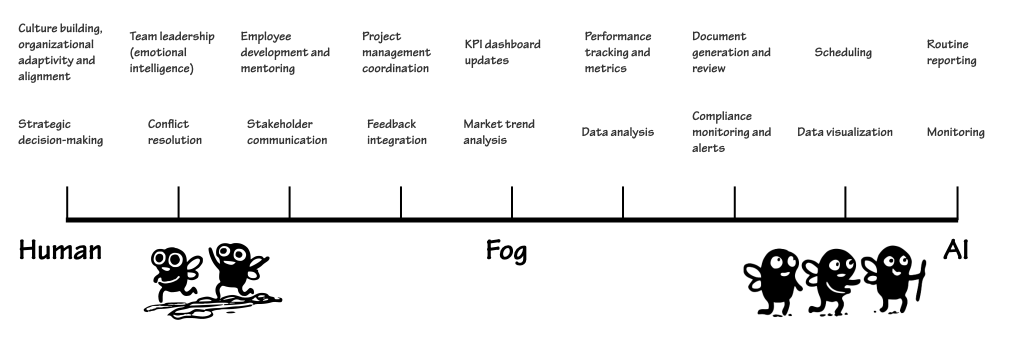
Most likely done by humans:
- Strategic Decision-Making: Managers will continue to have the final say in strategic initiatives and decisions that shape the direction of the company.
- Culture Building, Organizational Adaptivity, and Alignment: Leadership will be needed to shape organizational culture and support the alignment of teams towards common goals.
- Team Leadership (and Emotional Intelligence): Supportive leadership will be needed to guide teams, foster a positive work environment, and manage interpersonal dynamics.
- Conflict Resolution: Addressing conflicts within teams and mediating disputes will require human intervention and empathy.
- Employee Development and Mentoring: Personal interactions for coaching and mentoring employees will remain essential.
- Stakeholder Communication: AI may assist in drafting communications, but the final message delivery will likely remain a human task.
Most likely uncertain:
- Project Management Coordination: While AI tools can assist in scheduling and tracking, team leads and POs will oversee projects directly.
- Feedback Integration: AI may help gather feedback, but managers will interpret and incorporate it into strategies.
- Data Analysis: While AI can assist, human interpretation of data in the context of their goals may be needed.
- Market Trend Analysis and Insights: AI will actively analyze market data and provide insights to guide management decisions. Humans are still needed for interpretation.
- KPI Dashboard Updates (and interpretation): By automating data integration, providing real-time analytics, and offering personalized insights, AI will assist managers in focusing on interpretation.
Most likely AI:
- Routine Reporting and Monitoring: AI can automate the collection and reporting of team metrics, freeing managers to focus on strategy.
- Compliance Monitoring and Alerts: AI will handle the monitoring of compliance-related tasks, leaving managers to focus on broader implications.
- Automated Scheduling and Reminders: AI will manage calendars and optimize scheduling without human input.
- Data Visualization: AI will independently collect data and visualize it.
- Document Generation and Review: AI will assist in creating and reviewing standard documents and reports.
- Performance Tracking and Metrics: Continuous monitoring and reporting of key performance indicators (KPIs) will be automated.
Three years ago, it was foreseeable that AI would change our working lives. To what extent, however, could only be guessed at best. Or did you expect 15 years ago that it would hardly be possible to speak to people in public spaces today because they are constantly busy with their smartphones?