
Ikigai for Companies
Ikigai is a Japanese concept for the realization of goals. Its origins can be traced back to the Heian period (794–1185), where the term evolved from the word gai (meaning “shell”), which symbolized value and worth.
The term ikigai combines two words: Iki (生き), meaning “life” or “alive”, and Gai (甲斐), meaning “worth”, “benefit”, or “value”.
Ikigai therefore stands for “a reason for being” or “what makes life worth living”—basically a very individual perspective. However, companies such as Apple, Microsoft and Patagonia have used Ikigai very successfully to sharpen their corporate purpose
The following 4 key elements are the central components of Ikigai for organizations:
- What the company is good at (skills and expertise).
- What the company loves to do (passion and motivation).
- What the world needs (social or environmental impact).
- What the company can be paid for (business viability and market demand).
When these elements overlap, organizations can identify their unique purpose that drives value internally (employees) and externally (customers and society).
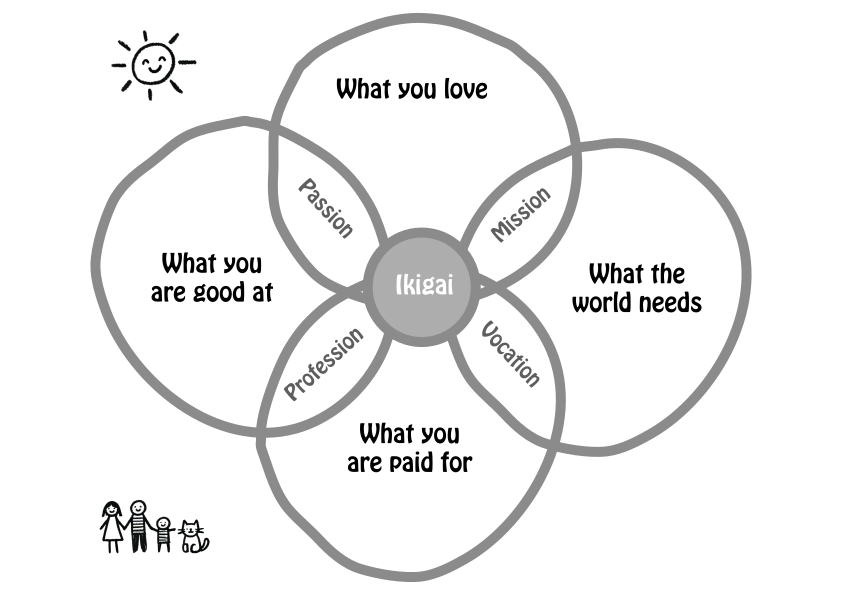
The 4 key elements form the 4 pillars of Ikigai:
- Passion: What you are good at and what is important to you—regulates the distribution of energy based on the enthusiasm of the stakeholders.
- Mission: What is important to you and what the world needs—orientation towards values that reflect societal needs.
- Vocation: What the world needs and what you are paid for—identifies limitations in terms of market fit.
- Profession: What you are good at and what you get paid for—ensuring sustainable resource allocation for long-term success.
Benefits of applying Ikigai in Organizations are:
- Purpose-Driven Culture: Helps employees align personal values with organizational goals, fostering pride and engagement.
- Improved Decision-Making: Clarifies priorities by focusing on activities that align with the company’s mission and values.
- Customer Connection: Resonates with customers who share similar values, increasing loyalty and advocacy.
- Sustainability and Impact: Encourages businesses to consider their role in making the world a better place, benefiting people, planet, and profit.
The following steps are helpful when implementing Ikigai in organizations:
- Reflect collaboratively: Conduct workshops or sessions with leadership teams and employees to answer key questions: What are we good at? What do we love to do? What does the world need from us? What can we be paid for?
- Define Purpose: Use insights from these discussions to articulate a clear purpose that integrates passion, mission, profession, and vocation.
- Embed in Culture: Align business strategies with this purpose. Foster open communication about individual and collective goals. Encourage employees to find personal fulfillment in their roles.
- Measure Success: Track how well the organization’s activities align with its Ikigai through employee satisfaction, customer loyalty, and social impact metrics.
Examples of organizational Ikigai:
Apple embraced Ikigai (under Steve Jobs’ leadership) by focusing on creating beautifully designed and user-friendly technology that met global needs. Jobs’ passion for design and innovation intersected with technical expertise, societal demand for intuitive technology, and immense profitability to establish Apple as a global leader
Microsoft found its Ikigai when it shifted from simply solving technical problems to a broader mission: putting a personal computer in every home worldwide. This vision, driven by Bill Gates’ passion for technology, technical expertise, societal need for accessible computing, and strong market demand, propelled Microsoft into becoming one of the world’s most successful companies.
Patagonia embodies Ikigai by aligning its passion for environmental activism with its business model. Through campaigns like “Don’t Buy This Jacket,” the company focuses on encouraging sustainable consumer behavior rather than simply selling products. By combining their love for nature, expertise in outdoor gear, societal need for sustainability, and profitability, Patagonia has created a purpose-driven brand that resonates deeply with customers and employees alike.
SOA Professionals (SAP solutions) successfully used Ikigai to redefine purpose collaboratively, leading to stronger internal alignment and external impact.