
Adaptive Leadership on the Rise
In 2018, McKinsey analyzed over 5,000 projects and found 56% failed to meet return expectations, 45% exceeded budgets, and 17% were catastrophic enough to endanger company survival. By 2020, only 10% of major projects were completed on time, within budget, and met expectations.
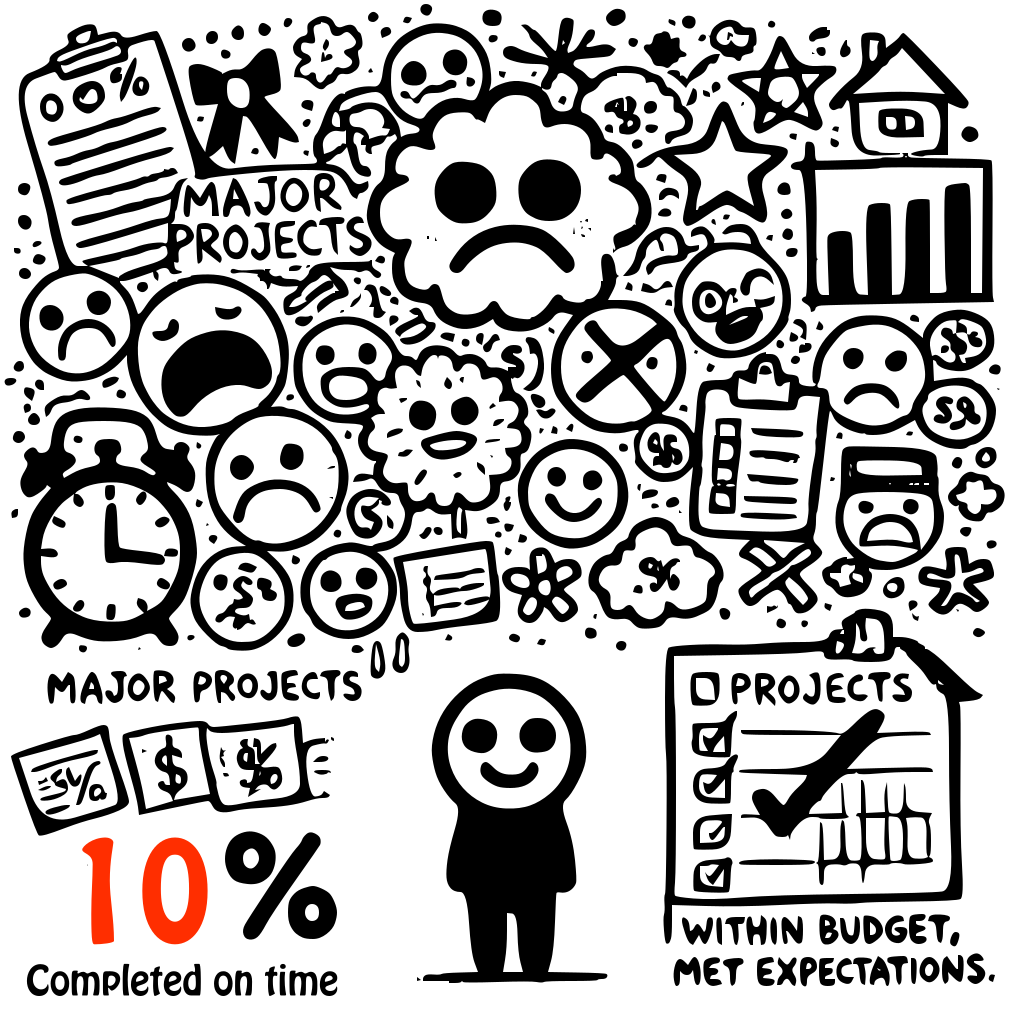
Fast forward to 2024, studies show a brighter picture: 20-40% of major projects now succeed within time, budget, and scope.
What changed?
One key factor: Adaptive Leadership.
From “I think, you do” to “I provide guidelines for your thinking,” leadership has evolved:
- Industry 1.0: Bosses think; employees execute.
- Industry 3.0: Complex environments demand decentralized thinking where employees solve problems independently.
Adaptivity and servant leadership have become essential as shifting markets, evolving technologies, and changing customer demands require flexible, empowered teams.
5 Key Principles of Adaptive Leadership:
- Lead by example, not control:
Agile leaders demonstrate what’s possible, encouraging teams to surpass expectations. Trust replaces micromanagement, fostering innovation—even through occasional failures. - Continuous learning:
Agile teams never settle. They challenge inefficiencies, confront customer pain points, and adapt as needed. “We’ve always done it this way” becomes obsolete. - Empower teams:
Set goals and let teams chart their paths. A simple coffee-break check-in often proves more effective than hours of status meetings. One development team ditched rigid sprints for flexible cycles—resulting in faster releases and happier customers. - Customer-centric thinking:
Think from the customer’s perspective. Show early prototypes rather than waiting months for perfection. Long-term success beats short-term wins. - Open communication:
Transparency builds trust. Address issues early. As one project manager wisely said, “Better an unpleasant conversation today than a catastrophe next month.”
Adaptive leadership has become the cornerstone of successful, future-proof organizations. Those that embrace this shift are thriving in an era of constant change.
Sources:
https://www.mckinsey.com/capabilities/mckinsey-digital/our-insights/delivering-large-scale-it-projects-on-time-on-budget-and-on-value
https://teamstage.io/project-management-statistics/
https://vorecol.com/blogs/blog-how-adaptive-leadership-styles-influence-employee-performance-and-productivity-in-remote-work-environments-204825
https://scholarworks.waldenu.edu/dissertations/9449/